
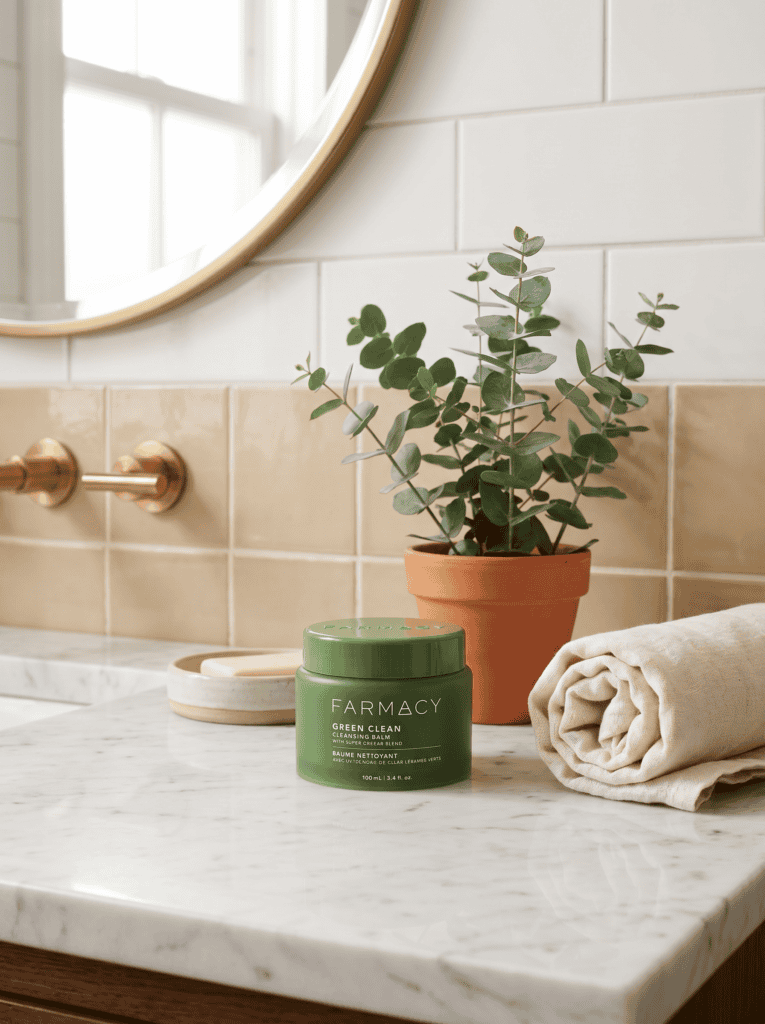
"Clean beauty" refers to products formulated without ingredients considered harmful or potentially harmful to human health. There's no single legal standard – different brands and retailers define it differently. Generally it means no parabens, phthalates, synthetic fragrances, formaldehyde-releasing preservatives, or other flagged chemicals.
The best clean beauty brands actually deliver on performance. Top picks: Ilia Beauty for clean makeup with real pigment, Pai Skincare for sensitive skin that reacts to everything, Biossance for science-backed clean skincare, RMS Beauty for effortless clean complexion products, and Drunk Elephant for results-first clean formulas. All are widely available and worth the switch.
Quick Takeaways
- "Clean" has no legal definition – each brand and retailer sets its own standard
- Ilia and RMS Beauty are the two clean makeup brands I reach for most
- Biossance's squalane-based formulas are genuinely effective, not just "clean"
- Switching gradually by category is easier than a full overnight overhaul
- Fragrance-free does not always mean clean – and clean does not always mean fragrance-free
In This Post
- Why I Made the Switch to Clean Beauty
- The 8 Best Clean Beauty Brands Worth Switching To
- Best Brand by Category
- What "Clean" Actually Means (and What It Doesn't)
- Ingredients to Avoid – and Why
- Clean Beauty Certifications Worth Trusting
- How to Switch to Clean Beauty Without Wasting Money
- Does Clean Beauty Perform As Well?
- How to Spot Greenwashing
- Frequently Asked Questions
Clean, sensitive-skin-safe, and the easiest cream blush to blend.
Skincare-forward base with clean ingredients and real glow.
Shop Now →Clean, fragrance-free body care that actually works.
Why I Made the Switch to Clean Beauty
I didn't switch to clean beauty because I was scared of conventional products. I switched because I was dealing with chronic skin sensitivity and wanted to simplify what I was putting on my face every day.
When I started reading ingredient labels, I realized I had no idea what most of the stuff in my products was – or why it was there. That felt like a problem. Not because every unfamiliar ingredient is harmful, but because I was using a lot of products daily, and I wanted to understand what was in them.
What surprised me most was how many clean beauty products actually outperformed what I'd been using. Once I found the right brands, I stopped missing anything from my old routine.
The 8 Best Clean Beauty Brands Worth Switching To
These are the brands I actually use and recommend. Not the ones with the prettiest packaging or the most Instagram presence – the ones that deliver real results.
Ilia is the brand I'd recommend to anyone switching from conventional makeup. Their formulas are genuinely better than comparable conventional products in many cases. The Super Serum Skin Tint alone converted me. It's not just clean – it's exceptional.
Best Brand by Category
What "Clean" Actually Means (and What It Doesn't)
"Clean" is a marketing term without legal definition. The FDA doesn't regulate it. That means any brand can call itself clean without meeting any particular standard.
In practice, most clean beauty brands operate by their own "free from" list – a list of ingredients they've chosen not to use. Retailers like Sephora (with their "Clean at Sephora" program) and Credo Beauty (with their Credo Clean Standard) have published their own standards that brands must meet to qualify.
This isn't a reason to distrust clean beauty – it's a reason to be a smart consumer. Look for brands that publish their ingredient standards, third-party certifications, and clear explanations of why they've excluded certain ingredients. Transparency is the real signal of a trustworthy clean brand.
Ingredients to Avoid – and Why
- Parabens – preservatives (methylparaben, propylparaben) that are potential endocrine disruptors at high doses
- Phthalates – plasticizers linked to hormone disruption; often hidden under "fragrance"
- Synthetic fragrance – can contain dozens of undisclosed chemicals; common irritant and allergen
- Formaldehyde-releasing preservatives – DMDM hydantoin, diazolidinyl urea; can cause contact dermatitis
- Hydroquinone – skin lightener with potential concerns at high concentrations
- Oxybenzone – chemical UV filter flagged for coral reef damage and potential hormone disruption
- Talc – historically linked to asbestos contamination when sourced improperly
It's worth noting that most of these ingredients are considered safe by regulatory bodies at the concentrations used in cosmetics. The concern isn't a single product – it's cumulative daily exposure across many products over years.
You don't need to panic about every product you currently own. But if you're going to use something every day for years, understanding what's in it is reasonable due diligence.
Clean Beauty Certifications Worth Trusting
Third-party certifications are the most reliable way to verify a brand's clean claims, because they require independent verification rather than self-reporting.
| Certification | What It Covers | Rigor Level |
|---|---|---|
| MADE SAFE | Human health, ecosystems, wildlife | Very high – most comprehensive |
| EWG Verified | EWG's Skin Deep database standards | High – well-respected standard |
| COSMOS Organic | Organic and natural standards | High – rigorous EU-based standard |
| Credo Clean Standard | Retailer-defined clean standard | Medium-high – retail-enforced |
| Sephora Clean | Sephora's free-from list | Medium – widely accessible standard |
How to Switch to Clean Beauty Without Wasting Money
The best approach is category-by-category, not all at once. Start with the products you use most frequently and leave on your skin longest – that's where ingredient choice matters most.
Prioritize in this order: serums and moisturizers (daily leave-on products), sunscreen (daily and high-volume), foundation and complexion products (worn all day), then lip products, mascara, and everything else.
Don't throw out products you already own just to "go clean." Use what you have. When something runs out, replace it with a cleaner alternative. This approach is better for your wallet and better for the environment.
Does Clean Beauty Perform As Well?
Honestly – yes and no, depending on the category. In skincare, clean beauty has caught up almost entirely. Biossance, Drunk Elephant, Pai, and True Botanicals all produce results comparable to their conventional counterparts. Some products are genuinely better.
In makeup, the gap used to be significant. Clean makeup struggled with pigment payoff, wear time, and shade range. That gap has largely closed. Ilia, Kosas, and Saie now make products that compete directly with conventional makeup on performance – not just ingredient lists.
The one area where clean beauty still lags is very high-coverage or ultra-long-wear formulas. If you need a bulletproof 16-hour foundation for a special event, you may still find conventional options perform better. For everyday use, clean beauty is fully capable.
How to Spot Greenwashing
Greenwashing is when a brand uses "clean," "natural," or "green" language without meaningful substance behind it. It's common, and it's frustrating when you're genuinely trying to make better choices.
Red flags: vague terms like "botanical" or "eco-friendly" without specifics, ingredient lists that still include the exact things clean brands avoid, and "clean" claims on packaging with no ingredient transparency on their website.
Green flags: published "free from" lists with explanations, third-party certifications, ingredient glossaries, and founders who talk specifically about why they chose each ingredient. The brands in this list all pass this test.
A Final Note on Clean Beauty and Confidence
Clean beauty, at its best, is about understanding what you're putting on your body and making informed choices. It's not about fear, and it's not about perfection.
The brands in this guide aren't just clean – they're genuinely good. They'll make you feel better about your routine not because they scared you into it, but because the products actually work and you know exactly what's in them.
That clarity – knowing your ingredients, trusting your products, and building a routine that aligns with your values – is its own kind of confidence. That's what clean beauty is actually for.
Frequently Asked Questions
"Clean beauty" means formulated without ingredients considered harmful or potentially harmful to human health. There's no legal standard – each brand and retailer defines it differently. Look for brands that publish their "free from" lists and third-party certifications as proof of their standards.
Not automatically – "clean" doesn't equal effective, and conventional doesn't equal harmful. Clean beauty is worth considering if you have sensitive skin that reacts to many products, if you want to reduce long-term cumulative exposure to certain ingredients, or if you simply prefer to know what's in your products.
Yes – Drunk Elephant avoids what they call the "Suspicious 6": silicones, fragrance (essential oils included), sodium lauryl sulfate, chemical sunscreens, and drying alcohols. They're clean by their own definition and are certified by Sephora's Clean program. Their formulas are effective and science-backed.
Ilia Beauty for makeup and Biossance for skincare are the two easiest starting points. Both are widely available at Sephora, both have clear clean credentials, and both perform well enough that you won't feel like you're sacrificing anything in the transition.
Sometimes – but not always. Kosas, Saie, and Ilia are competitively priced with conventional mid-range and prestige brands. Biossance's squalane oil is under $35 and outperforms many more expensive facial oils. The price premium for clean beauty is real in some cases, but it's not a rule across the board.
No – "natural" and "clean" are different things. Natural refers to the origin of ingredients (derived from plants or minerals rather than synthesized). Clean refers to safety standards, which can include both natural and lab-made ingredients. Many clean beauty brands use synthetic ingredients that pass clean standards because they're safer or more stable than natural alternatives.
Yes – several clean beauty brands specifically formulate for acne-prone skin. Biossance's squalane is non-comedogenic and excellent for acne-prone skin. Ilia and Saie both make non-comedogenic complexion products. The key is looking for "non-comedogenic" on the label, which matters regardless of whether a product is clean or conventional.
Sephora (look for the "Clean" badge), Credo Beauty (stricter clean standard), The Detox Market, and directly from brand websites. Whole Foods and Ulta also carry some clean beauty options. Credo Beauty has the most rigorous retailer clean standard if you want an extra layer of vetting.
Look for brands that publish their full ingredient standards, not just "clean" claims on packaging. Third-party certifications (MADE SAFE, EWG Verified, COSMOS) are the most reliable proof. If a brand can't tell you specifically why they chose each ingredient and what they exclude, treat their clean claims with skepticism.
Yes – RMS Beauty has been one of the original clean makeup brands since 2009 and the formulas remain genuinely good. The Un Cover-Up is still one of the best natural-finish concealers and foundations available. They're less buzzy than newer brands but consistently deliver on their promises.
Related Posts
About the Author
I'm Jasmine Del Toro, a Los Angeles-based lifestyle blogger who tests beauty products, wellness trends, and everyday solutions in real life. I've spent years navigating the clean beauty space – reading ingredient labels, testing formulas, and figuring out which brands actually deliver on their "clean" claims and which ones are just pretty packaging.