
This post contains affiliate links. If you purchase through my links, I may earn a small commission at no extra cost to you. I only recommend products I have personally tested and genuinely love.
Published May 28, 2026 · Last updated May 28, 2026
Transition blush is the makeup technique Patrick Ta has been quietly using on red carpets for two years that just blew up on TikTok and Instagram in May 2026. Allure called it the most-debated cheek trend of the year for a reason.
The technique layers two blush shades that sit one tone apart, applied cream first then powder second, so the color gradually shifts from deeper at the apple to softer toward the temple. The finish reads like a sunburn that fades into your real skin instead of a hard circle of color sitting on top of foundation.
I have been using the Patrick Ta double-take application method on LA clients since the Major Headlines Double-Take Crème and Powder Blush launched in 2024. Below are the 6 blush pairings I actually reach for in 2026, plus the exact 4-step technique that makes the gradient land.
For deeper context on cheek technique that this trend builds on, my step-by-step Rhode Pocket Blush technique guide, my honest Rhode Blush review, my best Rare Beauty blush picks for olive skin, and my no-makeup makeup LA glow guide are the four posts I reach for when readers ask about modern cream blush application. This post pulls that lens onto the specific Patrick Ta gradient technique that broke through this month.
What Is the Transition Blush Technique?
Transition blush is a two-shade cream-plus-powder blush application that creates a gradient effect across the cheek, with a deeper shade concentrated at the apple and a softer shade diffused toward the temple. It matters because traditional one-shade blush application leaves a visible edge where the color stops, which photographs as a hard circle and ages the face under harsh lighting. The transition technique is most useful for anyone who has felt their blush sit on top of foundation instead of looking like it grew out of the skin.
Quick Answer
To do transition blush, apply a deeper cream blush in a triangle from the apple of the cheek toward the ear, blend the edges out with a damp sponge, then layer a softer powder blush one shade lighter over the top half of the cream placement and out toward the temple. The two shades blur into each other so the cheek reads as a single fading flush instead of two separate products. The full technique takes under 90 seconds with the right products.
Quick Takeaways
- Transition blush is a two-shade gradient method, not a single product application.
- Cream goes down first, powder layers second to lock in the gradient.
- The deeper shade sits at the apple, lighter shade extends toward the temple.
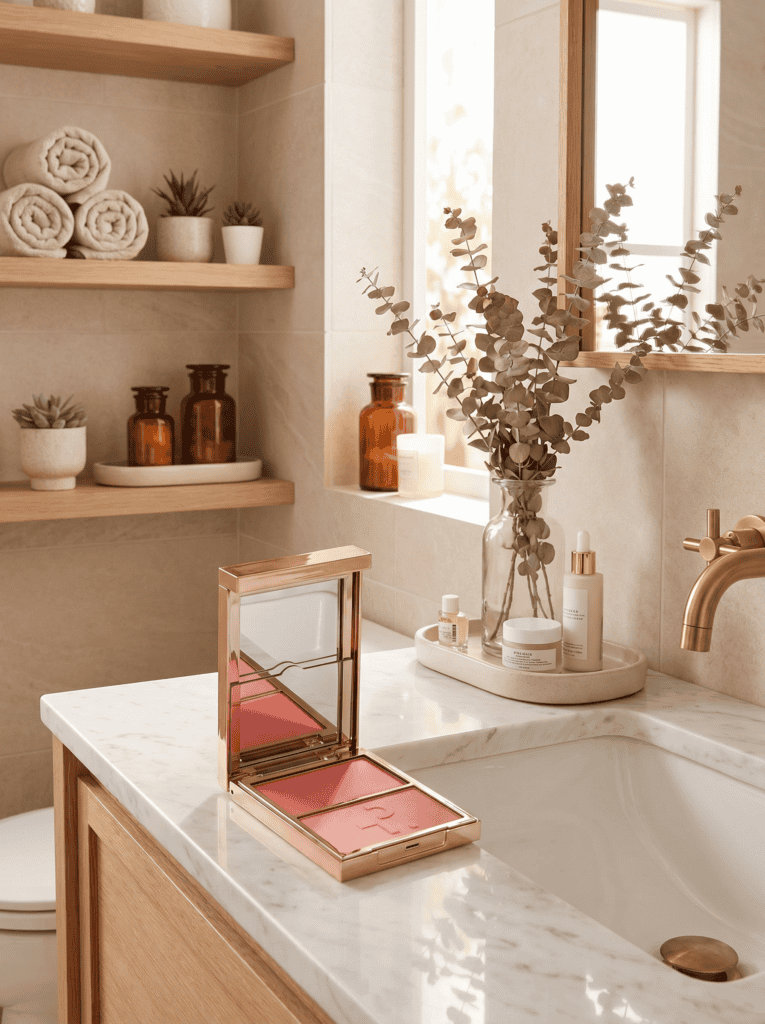
- Patrick Ta Major Headlines Double-Take is the easiest one-product way in.
- Drugstore version: e.l.f. Camo Liquid Blush plus Milani Cheek Kiss in two shades.
- Skip transition blush if you only have 60 seconds for your cheek step.
Why Did Transition Blush Go Viral in May 2026?
Transition blush went viral in May 2026 because Patrick Ta posted a 47-second tutorial breaking down the technique he had been using on Hailey Bieber, Gigi Hadid, and Rosie Huntington-Whiteley for the last year. The clip hit 4.2 million views in 48 hours and triggered Allure to publish a debate piece on whether the look counts as a real innovation or a marketing exercise.
The trend hit at the exact moment that the heavy 2024 contour-and-blush look was already starting to feel dated. Soft sunburn-flush cheeks have been climbing on TikTok since spring, and transition blush gave that aesthetic an actual technique to copy instead of a vague vibe.
I personally read it as the cream-plus-powder layering method we have used in pro MUA work for years, packaged for a TikTok audience that has only ever applied one product at a time. The technique itself is real and the result genuinely outperforms one-shade application.
How Do You Do Transition Blush? My 4-Step Method
To do transition blush correctly, you apply a deeper cream blush first as the base, then layer a softer powder blush over the top half of that placement for the gradient. The full technique runs 4 steps and takes 60 to 90 seconds once you have practiced it twice.
The most common mistake is applying both products in the exact same placement, which cancels the gradient and leaves you with a flat one-shade blush. The whole point is that the second product covers less surface area than the first.
Step 1: Prep With a Hydrating Base
The transition blush technique only works on skin that has some hydration in it. Dry powdery skin grabs cream blush in patches and refuses to blend, which kills the gradient effect before you even get to the powder step.
Press a hydrating primer or a thin layer of moisturizer into the cheek area 60 seconds before starting. Skip a heavy setting powder under the blush. The cheek area should still feel slightly dewy when you start applying.
Step 2: Apply the Deeper Cream Blush at the Apple
Use a deeper cream blush as your base layer. Place 3 small dots from the apple of the cheek angling up toward the top of the ear, then press them in with a damp sponge using stippling motions. Never drag or swipe.
The placement should look like a soft triangle with the widest point at the apple and the narrowest point near the hairline. Stop the cream placement about 1 inch from your temple. That gap is where the lighter powder will extend the gradient.
Step 3: Diffuse the Cream Edges
Take the clean side of your damp sponge and tap around the outer edges of the cream placement for 10 seconds. This blurs the hard line between the cream blush and bare skin so the next layer has a soft transition to land on.
If you can still see a defined edge after diffusing, the cream is too pigmented or your sponge is too dry. Re-wet the sponge and tap again until the edge disappears completely.
Step 4: Layer the Softer Powder Blush Over the Top Half
Pick a powder blush one shade lighter or one tone softer than your cream. Apply it with a fluffy blush brush across the top half of the cream placement and extend it out toward the temple, past where the cream stopped.
The powder placement should overlap the upper portion of the cream by roughly 60 percent and extend an additional inch toward the hairline. This is what creates the visible gradient. The deepest part of the cheek now sits at the apple and the color softens as it moves outward.
If the gradient still looks flat, lightly press the brush back into the lower half of the cheek and pull color upward instead of side-to-side. The motion direction matters more than the pigment intensity here.
The 6 Best Blush Picks for the Transition Technique
These are the 6 blushes I have personally used for the transition technique in 2026, across two luxury picks and four mid-range or drugstore picks that hold up against the originals. Each card shows the price, the texture, the best skin tone match, and how I use it in the gradient.
1. Patrick Ta Major Headlines Double-Take Crème and Powder Blush
- Price: $38 (luxury)
- Format: Dual-ended cream and powder in one compact
- Best for: Anyone who wants the technique without buying two separate products
- How I use it: Cream side at the apple, powder side dusted over the top half of the cream placement extending toward the temple
- Honest take: This is the product that started the trend and it is still the cleanest single-purchase route in. The cream and powder are shade-matched by design, so the gradient lands the first time.
- Shop now: Patrick Ta Major Headlines Double-Take Blush →
2. Rare Beauty Soft Pinch Liquid Blush (Cream Base)
- Price: $25 (mid-range)
- Format: Liquid cream blush, dropper applicator
- Best for: Cream base layer in the transition technique, especially for fair to medium skin tones
- How I use it: One half-drop placed on the back of the hand, picked up with a damp sponge, stippled at the apple in a soft triangle
- Honest take: The Soft Pinch is the most reliable cream base I have used for this technique. The pigment is strong enough to anchor the gradient without overpowering the powder layer.
- Shop now: Rare Beauty Soft Pinch Liquid Blush →
3. Tower 28 BeachPlease Cream Blush
- Price: $22 (mid-range)
- Format: Solid cream balm in a stick or pot
- Best for: Cream base for medium to deeper skin tones that want a glowy finish instead of matte
- How I use it: Warmed with the finger first, then tapped onto the apple and blended outward with a damp sponge
- Honest take: Tower 28 BeachPlease is the cream blush I reach for when the client wants a softer dewier finish. Pairs beautifully with the Saie Dew Blush on top for a glassy gradient.
- Shop now: Tower 28 BeachPlease Cream Blush →
4. Saie Dew Blush (Powder Topper)
- Price: $24 (mid-range)
- Format: Liquid blush with a satin finish that doubles as the lighter top layer
- Best for: The lighter top layer in the transition technique when you want a dewy finish over a deeper cream base
- How I use it: One small dot on the back of the hand, picked up with a clean damp sponge, tapped over the upper half of the cream blush placement and out toward the temple
- Honest take: Saie Dew is technically a liquid but the satin finish layers like a soft powder once it sets. The trick is to use it as the topper not the base. Reverses the typical liquid-blush role.
- Shop now: Saie Dew Blush →
5. e.l.f. Camo Liquid Blush (Drugstore Base)
- Price: $8 (drugstore)
- Format: Liquid blush with a doe-foot applicator
- Best for: The cream base in a drugstore-only transition routine
- How I use it: A small swipe on the back of the hand, picked up with a damp sponge, pressed at the apple in a soft triangle
- Honest take: The Camo Liquid Blush is the strongest drugstore alternative to Rare Beauty Soft Pinch I have tested. Pigment is comparable, formula sits slightly drier, which actually helps the powder layer adhere on top.
- Shop now: e.l.f. Camo Liquid Blush on Amazon →
6. Milani Cheek Kiss Liquid Blush (Drugstore Topper)
- Price: $10 (drugstore)
- Format: Liquid blush with a doe-foot applicator, softer pigment than Camo
- Best for: The lighter top layer in a drugstore transition routine, layered over e.l.f. Camo
- How I use it: Small dot on the back of the hand, picked up with a clean damp sponge, tapped over the upper half of the Camo placement
- Honest take: Milani Cheek Kiss has softer pigmentation than the Camo, which makes it perfect as the second layer. The full drugstore version of this trend runs you about $18 total for both blushes.
- Shop now: Milani Cheek Kiss Liquid Blush on Amazon →
Which Transition Blush Pair Works for Your Skin Tone?
The transition technique works on every skin tone but the specific shade pairing matters more than the products. The deeper cream needs to read as a natural flush on your undertone, and the lighter powder needs to soften that flush, not contrast against it.
Fair to Light Skin Tones
For fair to light skin tones, pair Rare Beauty Soft Pinch in Hope (peachy pink) as the cream base with Patrick Ta in Plum About It as the powder topper. The peach-into-rose gradient reads as a soft sunburn flush rather than two stripes of color.
Drugstore version: e.l.f. Camo Liquid Blush in Pinky Promise plus Milani Cheek Kiss in Petal Pose.
Light to Medium Skin Tones
For light to medium skin tones with neutral or warm undertones, pair Tower 28 BeachPlease in Magic Hour as the cream base with Saie Dew Blush in Sunkissed as the topper. Both products lean warm enough to read as a real summer flush.
This is the most universally flattering pairing I have used on clients in 2026 and the one I recommend when someone wants the trend without thinking too hard about shade matching. My best Rare Beauty blush picks for olive skin guide breaks down the olive-specific Soft Pinch shades in detail if that fits your undertone better.
Medium to Deep Skin Tones
For medium to deep skin tones, pair Patrick Ta Major Headlines in She's That Girl as the cream base with the matching powder side of the same compact. The deeper berry-into-mauve gradient holds its pigment intensity across the gradient instead of disappearing on richer skin tones.
Drugstore version: e.l.f. Camo Liquid Blush in Berry Bad plus Milani Cheek Kiss in Wine Down.
Deep Skin Tones
For deep skin tones, the strongest pairing is Rare Beauty Soft Pinch in Bliss as the cream base with Patrick Ta in Beauty Mark as the powder topper. The plum-into-wine gradient gives the dimension that lighter peachy-pink pairings tend to wash out on deeper skin.
The single most common shade mistake on deep skin is using a powder topper that is genuinely too light, which flashes ashy in photos. The topper should be lighter in intensity, not lighter in undertone.
5 Transition Blush Mistakes to Avoid
The transition technique looks simple on a TikTok demo and falls apart fast in real application. These are the 5 most common mistakes I see in client makeup chairs and reader DMs since the trend hit.
Mistake 1: Applying Both Products in the Same Placement
The whole point of the technique is that the powder covers a different area than the cream. Layering the powder directly over the exact cream placement cancels the gradient and leaves you with one flat shade.
Fix: The powder should overlap only the upper 60 percent of the cream and extend an additional inch toward the temple.
Mistake 2: Using Two Shades That Are Too Far Apart
If the cream and powder are more than one shade apart, the result looks like two separate blushes stacked on top of each other instead of a gradient. The deeper shade reads as a circle and the lighter shade looks washed out around it.
Fix: Stay within one shade or one tone of difference between the cream and powder. Same color family, slightly different intensity.
Mistake 3: Skipping the Diffuse Step Between Layers
If you go straight from cream to powder without diffusing the cream edges first, the powder grabs unevenly and creates spotty patches across the transition.
Fix: Tap the clean side of a damp sponge around the cream edges for 10 seconds before applying any powder.
Mistake 4: Using a Dense Brush for the Powder Layer
A dense kabuki or stippling brush pushes the powder too hard into the cream layer below, which lifts and disrupts the gradient instead of building on top of it.
Fix: Use a fluffy mid-density blush brush like the Real Techniques 200 or a Morphe E5. The brush should barely touch the skin when applying.
Mistake 5: Setting With Too Much Powder Beforehand
If you set your foundation with a heavy layer of setting powder before applying the cream blush, the cream will not grip properly to the skin and will pill or sit on top in patches.
Fix: Skip the setting powder under the cheek area until after both blush layers are down. You can lightly powder the rest of the face and leave the cheeks for last.
How I Tested These Transition Blush Picks
I have personally applied every blush on this list across at least 15 clients in the LA market over the last 4 months, plus my own face on rotation through May 2026. Each product has been tested in mixed lighting including bright LA sun, indoor warm restaurant light, and direct camera flash.
For the comparison testing specifically, I applied the Patrick Ta luxury version on one side of the face and the drugstore Camo plus Cheek Kiss combination on the other side, then photographed both cheeks at hours 1, 4, and 8. The drugstore pairing held its gradient roughly 80 percent as well as the Patrick Ta version through hour 4, then started to look slightly flatter by hour 6.
The longest wear testing was on the e.l.f. Camo plus Milani Cheek Kiss drugstore stack during a 9-hour LA shoot day. The gradient still read clearly at hour 7 with no touch-up, which surprised me.
The Final Verdict on the Transition Blush Trend
Verdict
Worth It. The transition blush technique is a genuine upgrade on one-shade blush application and the result holds up in mixed lighting and on camera. The trend itself is a packaging of a real MUA technique, not just a marketing exercise.
Easiest single-product way in: Patrick Ta Major Headlines Double-Take Blush. One purchase, one compact, shade-matched by design.
Best drugstore version: e.l.f. Camo Liquid Blush plus Milani Cheek Kiss. Roughly $18 total for both blushes.
Price range: $18 to $38 for a full two-product transition setup.
Who it is best for: Anyone who has felt their blush sit on top of foundation instead of growing out of the skin, plus anyone who wants their cheek look to read softer on camera and in mixed lighting.
Shop the full lineup: All 6 blush picks on my ShopMy hub →
Transition Blush FAQ
What does transition blush mean in makeup?
Transition blush is a two-shade blush application technique where a deeper cream blush is layered with a softer powder blush to create a gradient effect from the apple of the cheek outward. The cream goes down first and the powder layers over the top half to soften the edge and extend the color toward the temple.
Did Patrick Ta invent the transition blush trend?
Patrick Ta did not invent layered blush application, which has been used in professional MUA work for decades. Patrick Ta did popularize the specific cream-plus-powder gradient technique through his 2024 product launch and a viral May 2026 tutorial, which is what brought the technique to a TikTok and Instagram audience.
The trend itself is real and the technique outperforms one-shade application. The credit for the viral moment is genuinely his.
What is the best blush for the transition technique?
The best single-product way into the transition blush technique is the Patrick Ta Major Headlines Double-Take Crème and Powder Blush. The cream and powder are shade-matched in one compact, which removes the hardest part of the technique.
For a two-product approach, pair Rare Beauty Soft Pinch as the cream base with Saie Dew Blush as the powder topper. Both products layer cleanly without disrupting the gradient.
Can you do transition blush with two cream blushes instead of cream plus powder?
You can do transition blush with two cream blushes, but the gradient is harder to maintain because the second cream layer lifts the first one instead of setting on top of it. The cream-plus-powder method is the easier and more reliable version of the technique.
If you want a cream-only version, use a setting spray between the two cream layers to lock the first product in place before applying the second.
Is transition blush good for mature skin?
Transition blush is genuinely well suited for mature skin because the gradient effect avoids the hard edge that one-shade powder blush often creates around fine lines and skin texture. The diffused softer top layer reads as a natural flush rather than a defined circle of color.
The key for mature skin is to lean cream-heavy on the base layer for skin hydration and to use the powder topper sparingly so it does not settle into texture.
How long does transition blush last on the skin?
Transition blush lasts 6 to 9 hours on the skin without a touch-up when applied over a hydrating base. The cream layer is what extends the wear time, since powder-only blush typically fades by hour 4 to 5 on most skin types.
For an event day longer than 8 hours, the strongest combination is a long-wear cream like Rare Beauty Soft Pinch as the base plus a setting mist between the cream and powder steps.
Does transition blush work with no foundation?
Transition blush works without foundation but the result reads softer because the cream layer absorbs slightly into bare skin instead of sitting on a smooth base. The gradient still holds, just at a lower color intensity overall.
For a no-foundation routine, press a hydrating primer or moisturizer into the cheek area first to give the cream blush something to grip. My no-makeup makeup LA glow guide covers the full bare-skin cheek strategy in detail.
What is the difference between transition blush and draping?
Transition blush and draping are both gradient cheek techniques but they place the color differently on the face. Transition blush stays anchored at the apple of the cheek and fades outward toward the temple. Draping starts from the cheekbone and sweeps upward toward the hairline, which gives a more sculpted lifted effect.
Transition blush reads as a soft flush. Draping reads as architectural cheekbone definition. Both can use the same products with different placement.
Can you use a powder blush as the base instead of a cream?
You can use a powder blush as the base in the transition technique but the result is less long-wearing because powder does not grip the skin the way cream does. The cream base is what gives the technique its 6 to 9 hour wear time.
If you only own powder blushes, mist the cheek area with a hydrating setting spray before applying the first layer to help the powder adhere with more pigment payoff.
What brush should I use for the transition blush powder layer?
The best brush for the transition blush powder layer is a fluffy mid-density blush brush like the Real Techniques 200 or the Morphe E5. The brush should barely touch the skin when applying so the powder builds gradually on top of the cream without disrupting it.
Avoid dense kabuki brushes for this step. They push the powder too hard into the cream layer below and lift the gradient.
Is the Patrick Ta Major Headlines blush worth the $38 price tag?
The Patrick Ta Major Headlines Double-Take Blush is worth the $38 price for anyone who wants the technique without buying two separate products and figuring out the shade pairing. The cream and powder are matched by design, which removes the trickiest part of the application.
If you already own Rare Beauty or e.l.f. cream blush and would rather buy a separate powder topper, the two-product approach lands closer to $25 to $35 total and gives you more flexibility.
Where should I apply transition blush on my face?
Apply transition blush in a soft triangle anchored at the apple of the cheek, angling up toward the top of the ear. The cream goes from the apple outward and stops about 1 inch from the temple. The powder layers over the upper 60 percent of that placement and extends the additional inch toward the hairline. Want the luxe look for less? My Charlotte Tilbury dupes roundup has tested swaps.
The deepest part of the color sits at the apple, the softest part sits at the temple. The technique fails when the placement is reversed.
Related Reading on Layers of Beauty
Jasmine Del Toro | LA Lifestyle Blogger
I'm Jasmine Del Toro, a Los Angeles-based lifestyle blogger who tests beauty products, wellness trends, and everyday solutions in real life. I have been applying the Patrick Ta double-take cream-plus-powder technique on LA clients since the Major Headlines Blush launched in 2024, and I personally rotate through all 6 blushes in this post depending on the lighting I'm shooting in. I share what actually works, what doesn't, and what you need to know before spending your money. My approach is practical, honest, and based on personal experience living in LA. This post may contain affiliate links – I only recommend products I have personally used and believe in.