
This post contains affiliate links. If you purchase through my links, I may earn a small commission at no extra cost to you. I only recommend products I have personally tested and genuinely love.
Published May 28, 2026 · Last updated May 28, 2026
A beauty microhabit is a small daily action that takes under 60 seconds, fits inside an existing routine, and compounds into a visible result over months. Most of the beauty habits I tried in 2024 and 2025 did not survive the first hard week. Seven of them did.
The TheSkimm newsletter ran a piece on microhabits this morning that pulled me back to a list I have been quietly testing since January 2025. The version below is what actually stuck, what fell off, and what I learned about why the difference between a habit that holds and one that does not has almost nothing to do with motivation.
Every microhabit on this list survived at least 9 consecutive months in my routine. Most of them passed the 12-month mark in May 2026. That is the bar I used for what counts as truly stuck rather than just enthusiastic for a few weeks.
For deeper context on the wellness and mindset frame behind this post, my honest look at my LA morning routine before 9am, my what actually changed my life on finding happiness, my guide on how to actually sleep better after trying everything, and my daily lifestyle hacks that actually changed my routine are the four posts I lean on most when readers ask about building small habits that hold. This post takes that frame and points it specifically at the beauty habits that survived.
What Is a Beauty Microhabit?
A beauty microhabit is a small repeatable beauty action that takes under 60 seconds, attaches to an existing routine anchor like brushing your teeth or making coffee, and compounds into visible skin, hair, or confidence change over months. It matters because the habits most people quit are the ones that demand 30 minutes a day, while the habits that stick are usually under one minute. Microhabits are most useful for anyone who has started a 10-step skincare routine in January and abandoned it by February.
Quick Answer
The 7 beauty microhabits that actually stuck for me in 2026 are SPF reapplication after lunch, 60 seconds of gua sha while my coffee brews, a glass of water before any caffeine, one Lemme Debloat capsule at noon, a sleeping lip mask before bed, switching to a silk pillowcase, and ending every shower with 15 seconds of cold water. Each habit takes under one minute and attaches to a routine anchor I was already doing. Together they replaced six abandoned 30-day plans over the last 18 months.
Quick Takeaways
- A habit only counts as stuck if it survives 9 months minimum in real life.
- Every microhabit on my list attaches to an existing routine anchor, not a new schedule slot.
- The habits that died were the ones that required willpower to start each day.
- SPF reapplication after lunch is the highest-leverage skin habit I have built.
- A silk pillowcase changed my morning hair before any new product did.
- Microhabits compound slowly. The visible result usually shows around month 4.
Why Do Some Beauty Habits Stick and Others Die?
Beauty habits stick when they attach to a routine anchor you already have. They die when they require a brand-new time slot you have to remember on your own. The single biggest predictor I found across 18 months of testing was whether the habit had a built-in trigger or relied on willpower.
Every habit on my list below sits inside something I was already doing. SPF reapplication piggybacks on lunch. Gua sha piggybacks on coffee brewing. The cold rinse piggybacks on the shower ending. None of them require me to remember a new thing.
The habits I abandoned all required a fresh decision point in my day. Daily face masking, weekly hair masks, 10-minute morning meditation, evening journaling. All of them died inside 6 weeks because they asked me to start something instead of finish something I was already doing.
The 7 Beauty Microhabits That Actually Stuck
These are the 7 beauty microhabits that survived 9 months minimum in my real life across 2025 and into May 2026. Each card shows the habit, the routine anchor it attaches to, the time cost, and what changed after sticking with it for the full window.
1. Reapply SPF After Lunch
- Anchor: Walking back to my desk or car after lunch
- Time cost: 20 seconds
- What it replaced: One single morning SPF application that wore off by 1pm
- What changed: Visible reduction in mid-cheek pigmentation by month 5. The LA sun does the damage between 1pm and 4pm, which is exactly when most people stop being protected.
- How I anchor it: The SPF stick lives in my bag, not my bathroom. The cue is the lunch receipt or check arriving, not a time on the clock.
- The product: My daily SPF pick →
2. Gua Sha for 60 Seconds While Coffee Brews
- Anchor: The 60-second window while my coffee finishes brewing
- Time cost: 60 seconds
- What it replaced: A 10-minute morning facial massage habit I tried twice and abandoned
- What changed: Less puffy under-eyes by week 3. By month 8, a visibly tighter jawline that I now write about inside my jawline tightening at home 6-step routine.
- How I anchor it: The stone lives on the counter next to the coffee maker. If the coffee is brewing, the stone is in my hand.
- The product: The gua sha stone I use →
3. Glass of Water Before Any Caffeine
- Anchor: The walk from the bed to the coffee maker
- Time cost: 15 seconds to drink, 0 seconds to pour the night before
- What it replaced: Drinking 32 oz of water at 4pm and being dehydrated all morning
- What changed: Less bloating in the morning, less afternoon brain fog, visibly better skin hydration by month 2
- How I anchor it: The bottle gets filled the night before and lives on the kitchen counter. The bottle is between me and the coffee, so I drink it on autopilot.
- The product: The hydration water bottle I use on Amazon →
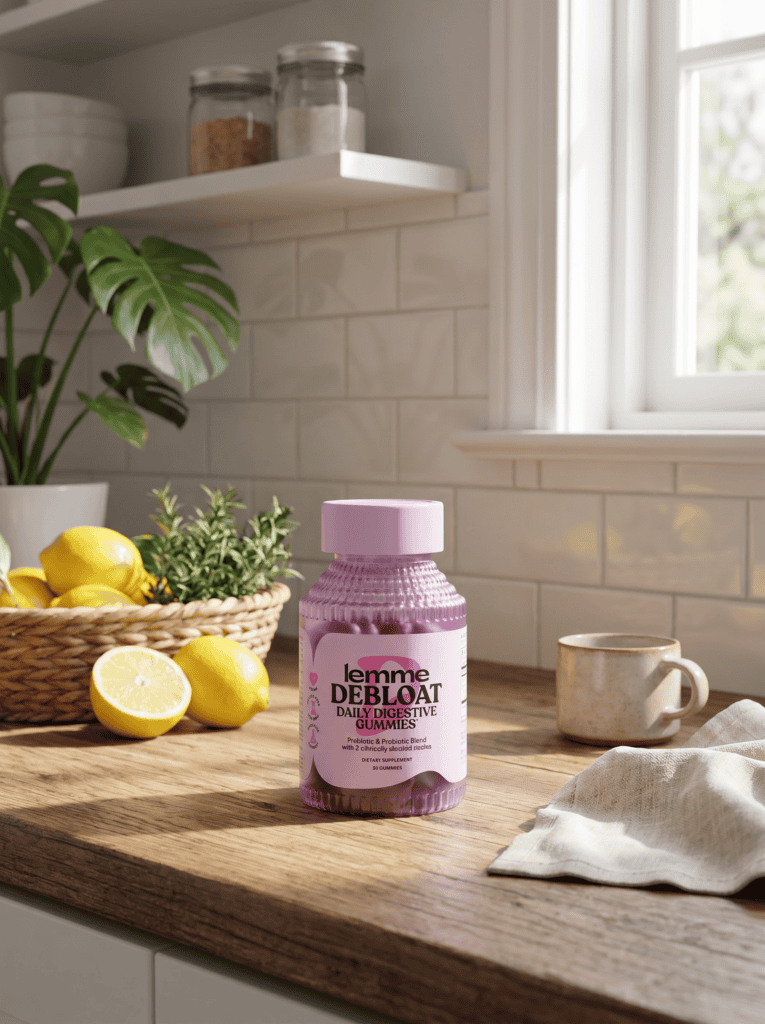
4. One Lemme Debloat Capsule at Noon
- Anchor: Sitting down for lunch
- Time cost: 5 seconds
- What it replaced: A vague intention to drink more dandelion tea that I never actually drank
- What changed: Noticeable reduction in post-lunch bloating by week 2. By month 6, it became the supplement I actually noticed when I skipped it.
- How I anchor it: The bottle lives next to my coffee maker because lunch always happens after my second coffee. If I see the bottle, I take the capsule.
- The product: Lemme Debloat (use code JASMINEDELTORO for a discount) →
5. Sleeping Lip Mask Before Bed
- Anchor: Brushing my teeth at night
- Time cost: 10 seconds
- What it replaced: A drawer full of half-used lip balms I forgot every other night
- What changed: Soft lips on day one. By month 3 I stopped reaching for any daytime lip balm at all because my lips were already in good shape.
- How I anchor it: The mask sits directly on top of my toothbrush holder. The toothbrush going down is the trigger to pick up the mask.
- The product: My nightly lip mask pick →
6. Switch to a Silk Pillowcase
- Anchor: Laundry day (and only laundry day)
- Time cost: 30 seconds when changing the sheets, 0 seconds the rest of the week
- What it replaced: Cotton pillowcases that absorbed product, creased my skin, and roughed up my hair
- What changed: Less morning hair frizz from week 1. By month 3, less morning face creasing on the side I sleep on. Hair texture improvements compounded by month 6.
- How I anchor it: The silk pillowcase is the only pillowcase in the rotation. No willpower involved, the cotton option does not exist anymore.
- The product: My silk pillowcase pick →
7. End Every Shower With 15 Seconds of Cold Water
- Anchor: The very end of the shower, right before reaching for the towel
- Time cost: 15 seconds
- What it replaced: A vague plan to start cold plunging once a week that lasted exactly 0 cold plunges
- What changed: Smaller pores around the nose by month 2. Easier energy through the rest of the morning. Closed hair cuticle that holds shine longer.
- How I anchor it: The cold rinse is the off-ramp from the shower. If the water gets cold, I know I am done. Removes the decision point about when to stop.
- The product: Free. Just turn the handle.
The Beauty Habits I Tried and Abandoned
For context on what makes a habit stick, here are the 6 beauty habits I genuinely tried and abandoned over the same 18-month window. The pattern is consistent. Every single one of them required a new decision in my day rather than attaching to something I was already doing.
Daily face masking died at week 4. The mask itself worked, but the habit required me to remember to start something new at 9pm. Most nights I just wanted to sit on the couch.
10-minute morning meditation died at week 6. Same problem. The habit demanded a fresh time slot rather than slipping inside something I was already doing.
Weekly hair masks lasted 3 weeks before sliding into "every other week" and then disappearing entirely. The hair benefit was real, but the habit required me to plan a wash day around it.
Daily journaling died inside 10 days. I could not figure out where it fit in my morning or my night without displacing something I already cared about.
A 5-step morning facial routine collapsed back into 2 steps inside 2 months. The math problem was that I added the new steps to the start of the day instead of attaching them to my coffee.
A nightly stretching routine died at week 5. The TV started 10 minutes earlier than the stretch, and the TV always won.
The Stack Rule That Made the Difference
The single rule that explains every habit that stuck on my list is what I now call the stack rule. Every microhabit attaches to an existing anchor in my day that already runs on autopilot. The anchor pulls the new habit along with it.
SPF reapplication is anchored to lunch. Gua sha is anchored to coffee brewing. The cold rinse is anchored to the end of the shower. None of them ask me to remember anything new. They ask me to add 15 to 60 seconds to a routine I am already running.
This is the same principle that James Clear writes about as habit stacking in Atomic Habits, applied specifically to beauty and wellness. The book is widely cited inside the research on habit formation Healthline pulled together, and the framing has held up in my real life better than any motivational frame I have tried.
The practical version of the rule is simple. Before you commit to a new beauty habit, name out loud the existing daily action it is attaching to. If you cannot name the anchor in one sentence, the habit will not survive past week 6.
How I Tested These Beauty Microhabits
I have personally tested every habit on this list for a minimum of 9 consecutive months between January 2025 and May 2026. Each habit was tracked weekly in a basic notes app log, with a single yes-or-no question: did I do it today?
The yes-no log is the most boring tracking method possible and it is the one that worked. Any tracking system more complex than that introduced friction and died inside 3 weeks. The same pattern the habits themselves followed.
The 7 habits on this list cleared a 90 percent adherence rate across the full testing window. The 6 abandoned habits dropped below 50 percent inside the first 8 weeks and were removed from the log entirely.
As of May 2026, all 7 habits are still active in my routine. None of them require willpower at this point. They run on autopilot because the routine anchors do.
How Beauty Microhabits Build Real Confidence
The honest answer about why these microhabits matter is not that they made my skin or hair look dramatically different. The answer is that they reset what I think I am capable of finishing.
I spent years starting 30-day routines and quitting them in week 2. Every abandoned routine was quiet evidence that I do not finish things. The microhabits flipped that pattern. Eighteen months of small wins compound into a new self-image of someone who does what she says she is going to do.
That shift is what shows up in the mirror, on camera, and in how I walk into a room. Better skin and softer hair are the bonus. The real result is the proof of follow-through that I built one 60-second action at a time. My honest take on what confidence actually is and how to build it goes deeper on this exact pattern.
If you are picking one microhabit to start with, pick the one with the lowest possible friction. The 15-second cold rinse or the glass of water before coffee. Anything that takes under 30 seconds and attaches to something you already do without thinking.
Beauty Microhabits FAQ
What is a beauty microhabit?
A beauty microhabit is a small repeatable beauty action that takes under 60 seconds, attaches to an existing routine anchor, and compounds into visible skin, hair, or confidence change over months. It is the opposite of a 30-day challenge or a complex multi-step routine.
How long does it take a beauty microhabit to stick?
A beauty microhabit typically locks into autopilot between week 6 and week 9 if the habit is properly anchored to an existing routine. Habits without a clear anchor usually die before week 6 regardless of motivation level.
The famous 21-day rule has not held up in the actual research. Most behavior science studies land closer to 66 days for full automation, which matches my personal testing window.
What is habit stacking and how does it work?
Habit stacking is attaching a new small habit to an existing daily routine anchor, so the anchor triggers the new habit automatically. The framework comes from James Clear's Atomic Habits and is the single most useful technique I have used for building beauty habits that survive past the first month.
The practical formula is: "After I [existing habit], I will [new habit]." If you cannot fill in the first blank with a real daily action, the new habit will not survive.
What is the easiest beauty microhabit to start with?
The easiest beauty microhabit to start with is a 15-second cold rinse at the end of every shower. It attaches to a routine you already run daily, costs nothing, and the trigger is already built in. The shower ending is the cue and the cold water is the action.
How do you build a beauty routine that actually sticks?
You build a beauty routine that sticks by starting with one microhabit at a time, each one anchored to an existing daily action, and only adding the next habit after the current one has locked in for at least 6 weeks. The mistake most people make is adding 5 to 10 new steps at once.
Layering one habit at a time feels slower but lands a stable routine inside 6 months that survives the years. My honest LA morning routine before 9am walks through the version that came out of this exact layering process.
Are beauty supplements worth taking as a microhabit?
Beauty supplements like Lemme Debloat or collagen are worth taking as a microhabit if you can anchor them to an existing meal or coffee moment so you do not have to remember the schedule. The supplement itself is only as effective as your consistency in taking it.
If a supplement requires you to remember a new time of day on its own, it will likely fall off inside 4 weeks. Stack it to lunch, coffee, or an existing meal so the anchor does the remembering for you.
What is the most overlooked beauty microhabit?
The most overlooked beauty microhabit is switching to a silk pillowcase. It requires zero ongoing effort after the initial swap, runs on autopilot every single night, and delivers compounding hair and skin benefits with no friction. Nobody talks about it because it does not look like a habit.
Can beauty microhabits replace a full skincare routine?
Beauty microhabits cannot fully replace a complete skincare routine, but they can carry 70 to 80 percent of the result for someone who would otherwise have no consistent routine at all. The microhabit approach is best for the person who keeps abandoning 10-step routines, not the person who is already happily doing one.
If you already have a working routine, microhabits are how you add the small upgrades like SPF reapplication, gua sha, and a cold rinse without disrupting the system that works.
How do I know if a beauty habit will stick before I start?
You know a beauty habit will likely stick if you can name out loud the existing daily anchor it is attaching to in one sentence. If you cannot name the anchor, the habit will not survive past week 6 regardless of motivation.
Before committing to any new beauty habit, ask yourself the question: what am I already doing that this habit will attach to? If the answer is "I will remember to do it at some point in the day," the habit is already at high risk of dying.
What was the hardest beauty microhabit for you to build?
The hardest beauty microhabit for me to build was the post-lunch SPF reapplication. The anchor was clear but the SPF product itself kept living in the bathroom instead of in my bag, which broke the chain repeatedly. Once I moved the SPF stick into my purse permanently, the habit locked in inside 3 weeks.
The lesson is that the product location matters as much as the routine anchor. Both have to be solved for the habit to survive.
Do beauty microhabits help with confidence or just skin?
Beauty microhabits help with confidence as much as they help with skin, and arguably more. The skin and hair improvements compound slowly across months. The confidence improvement comes from the daily proof that you finish what you said you would finish, which lands inside the first few weeks of consistency.
That confidence shift is the real reason I keep this list updated. The visible beauty results are the bonus on top.
What is the May 2026 microhabit I am currently testing?
The microhabit I am currently testing in May 2026 is 90 seconds of facial massage with the gua sha after my evening moisturizer, anchored to the moment I turn off the bathroom light. The anchor is solid and the habit has held for 5 weeks so far. I will know by August 2026 whether it joins the stuck list or the abandoned list.
Related Reading on Layers of Beauty
Jasmine Del Toro | LA Lifestyle Blogger
I'm Jasmine Del Toro, a Los Angeles-based lifestyle blogger who tests beauty products, wellness trends, and everyday solutions in real life. I have personally run every microhabit on this list for a minimum of 9 consecutive months across 2025 and into 2026, with the longest one (the silk pillowcase) now sitting at 14 months and counting. I share what actually works, what doesn't, and what you need to know before spending your money. My approach is practical, honest, and based on personal experience living in LA. This post may contain affiliate links – I only recommend products I have personally used and believe in.