
Published: May 15, 2026 | Last Updated: May 15, 2026
How Do You Exfoliate Your Face Without Overdoing It?
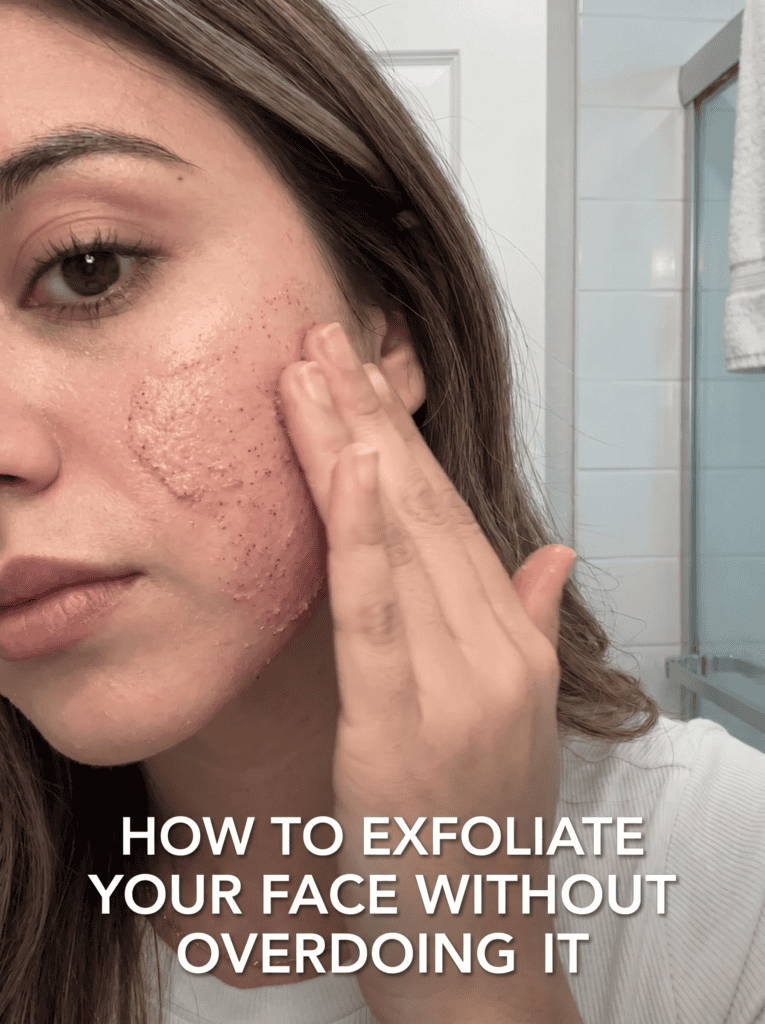
Exfoliating your face sounds simple until you overdo it and spend two weeks nursing a wrecked skin barrier. I've been there – red, raw, and wondering how a "brightening step" turned into a dermatologist visit.
The mistake most people make is treating exfoliation like the more, the better. Your skin has a natural turnover cycle, and exfoliation is meant to assist that process – not replace it entirely. Done correctly, it clears dead cells, helps serums absorb better, and smooths texture. Done wrong, it disrupts your barrier and makes everything worse.
Here's exactly how to exfoliate your face without overdoing it – the right type for your skin, how often to actually do it, and the products I've tested and recommend.
Exfoliation fits into a broader skincare sequence, and a few posts here help with the full picture. My morning skincare routine shows where exfoliation fits in the AM lineup, and 12 skincare ingredients to avoid covers what you should never layer with acids. Knowing your skin type before picking an exfoliant saves a lot of trial and error, and pairing exfoliation with the right SPF for your face every morning is what makes the results compound safely over time.
What Is Face Exfoliation?
Face exfoliation is the process of removing dead skin cells from the surface of your skin using either physical friction or chemical acids. It matters because dead cell buildup causes dullness, uneven texture, and blocked pores that prevent your other skincare products from absorbing properly. It's most useful for people dealing with dull skin, hyperpigmentation, clogged pores, or rough texture – with different methods suited to different skin types.
Quick Answer
Exfoliate at night, one to three times per week depending on your skin type, using a chemical exfoliant rather than a physical scrub. AHAs like glycolic acid work best for dullness and uneven tone. BHAs like salicylic acid work best for oily, clogged, or acne-prone skin. Always moisturize after and wear SPF the next morning.
Quick Takeaways
- Chemical exfoliants are more controlled and less damaging than physical scrubs
- AHAs target surface dullness and tone; BHAs target pores and oil
- Most people should exfoliate 1–3 times per week, not daily
- Over-exfoliated skin looks shiny, feels tight, and becomes more reactive
- Never layer exfoliants with retinol or vitamin C in the same routine
- SPF the morning after exfoliating is non-negotiable
Table of Contents
- Physical vs. Chemical Exfoliation: What's the Difference?
- Which Exfoliant Type Is Right for Your Skin?
- How Often Should You Exfoliate?
- How Do You Exfoliate Your Face Step by Step?
- What Are the Best Face Exfoliants?
- What Should You Never Mix With Exfoliants?
- What Exfoliation Mistakes Are Damaging Your Skin?
- How Do the Top Exfoliants Compare?
- How I Tested These Exfoliants
- Pros and Cons
- Frequently Asked Questions
What Is the Difference Between Physical and Chemical Exfoliation?
Physical exfoliation uses texture – a scrub, brush, or cloth – to manually remove dead skin cells from the surface. Chemical exfoliation uses acids or enzymes to dissolve the bonds holding dead cells to your skin, letting them shed naturally without friction. Both approaches work, but they suit different skin types and concerns.
Most dermatologists now lean toward chemical exfoliants for the face because the process is more controlled and far less likely to cause micro-tears or irritation. Physical scrubs with jagged particles – walnut shells, apricot kernels – are genuinely abrasive and can damage the skin surface even when they feel gentle. If you prefer a physical option for your face, look for round, smooth beads or a soft silicone brush instead.
For chemical exfoliation, the dose is controlled by concentration and frequency, which makes it much easier to find the right level for your skin without the guesswork that comes with scrubbing. This is why I switched to chemical exfoliants almost exclusively several years ago and haven't looked back.
Which Exfoliant Type Is Right for Your Skin?
Chemical exfoliants fall into three main families: AHAs, BHAs, and PHAs. Which one you use matters a lot depending on your skin type and what you're trying to fix. Using the wrong one for your skin is a common reason people write off chemical exfoliation entirely after a bad first experience.
AHAs (Alpha Hydroxy Acids) – Best for Dullness and Tone
Glycolic acid and lactic acid are the most common AHAs. They work on the skin's surface to dissolve dead cell buildup, brighten dullness, fade hyperpigmentation, and smooth fine lines. AHAs are water-soluble, meaning they work at the surface level rather than inside the pore – they're ideal for dry, dull, or sun-damaged skin and for anyone focused on texture and tone improvement.
Glycolic acid is the smallest molecule and most potent. Lactic acid is gentler and adds some hydration. Mandelic acid is the gentlest AHA, good for sensitive skin that can't tolerate glycolic.
BHAs (Beta Hydroxy Acids) – Best for Oily and Congested Skin
Salicylic acid is the main BHA, and it's oil-soluble – meaning it can actually penetrate inside the pore to clear out congestion. If you deal with blackheads, clogged pores, or acne-prone skin, BHA is your best tool. It also has anti-inflammatory properties that make it gentler on breakout-prone skin than most AHAs.
The effective OTC range is 0.5–2% salicylic acid. It can be drying at higher concentrations, so starting slow and layering with a good moisturizer matters.
PHAs (Polyhydroxy Acids) – Best for Sensitive Skin
PHAs – gluconolactone and lactobionic acid – are the newest and gentlest category. Their larger molecular size means they don't penetrate as deeply, which makes them significantly less irritating than AHAs or BHAs. They're the go-to for sensitive skin, rosacea-prone skin, or anyone who has found traditional chemical exfoliants too harsh.
As an added bonus, PHAs also act as humectants – they hydrate while they exfoliate. Results are slower, but tolerance is much higher.
How Often Should You Exfoliate Your Face?
This is where most people go wrong. There is no universal "twice a week" rule that applies to everyone – the right frequency depends entirely on your skin type and which product you're using. Over-exfoliating is one of the most common skin mistakes, and the symptoms are often misread as a sign to exfoliate more when the skin actually needs to rest.
- Sensitive or reactive skin: 1x per week max – start with PHA or low-percentage lactic acid (5%)
- Normal or combination skin: 2–3x per week with AHA or BHA
- Oily or acne-prone skin: 2–3x per week with BHA; a low-dose BHA toner can be used daily
- Dry skin: 1–2x per week – always follow with a rich moisturizer
- Using retinol at night: Cut back on exfoliation – retinol already accelerates cell turnover
Signs you're overdoing it: persistent redness, skin that feels tight and looks shiny rather than dewy, new sensitivity to products that didn't bother you before, or breakouts in places you don't normally get them. If any of those sound familiar, take a full week off all exfoliants and focus on barrier repair with ceramides and a gentle moisturizer.
As of May 2026, the most commonly cited guidance from dermatologists like the American Academy of Dermatology is to start conservatively and increase frequency only if your skin shows no signs of irritation after two to four weeks.
How Do You Exfoliate Your Face Step by Step?
Chemical exfoliants belong in your evening routine, not the morning. They increase photosensitivity and work best in the PM where they have hours to do their job without UV exposure interfering. Applying them in the morning and then heading outside undoes a significant portion of the benefit.
- Cleanse your face thoroughly and pat completely dry.
- Wait 30–60 seconds – exfoliants absorb more evenly on fully dry skin.
- Apply your exfoliant using a cotton pad or fingertips, depending on the product.
- Cover forehead, cheeks, nose, and chin – avoid the eye area and lips.
- Do not rinse off leave-on toners or serums; rinse-off masks follow their own timing instructions.
- Wait two to three minutes for the exfoliant to absorb before applying anything else.
- Apply your moisturizer to lock in hydration and support barrier recovery.
- The next morning, apply a broad-spectrum SPF 30+ before going outside – no exceptions.
Do not layer exfoliants. If you've used a glycolic acid toner, that's your exfoliation for the night – don't follow it with a retinol or another acid. Combining multiple exfoliating actives in one session is the fastest route to a damaged barrier. For a full system I use on wash day and beyond, my nighttime skincare routine shows exactly how this fits into a complete PM routine.
What Are the Best Face Exfoliants to Try?
These are the four I've personally used and can stand behind. They cover the full price range and different acid types.
The Ordinary Glycolic Acid 7% Toning Solution – Best Budget Pick (~$12)
This is the first recommendation for anyone starting chemical exfoliation on a budget. The 7% glycolic acid is strong enough to produce real results – smoother texture, brighter skin, gradual dark spot improvement – without being overwhelming at two to three uses per week. Apply with a cotton pad at night after cleansing; no rinsing needed. Shop on Amazon.
Paula's Choice SKIN PERFECTING 2% BHA Liquid – Best for Pores (~$35)
If you have clogged pores or acne-prone skin, this is the one. It has one of the most dedicated followings in skincare for a reason – the 2% salicylic acid formula is liquid, absorbs quickly, and consistently clears blackheads without causing dryness or peeling when used correctly. Apply after cleansing and let it absorb before continuing your routine. Shop on Amazon.
First Aid Beauty FAB Skin Lab Resurfacing Liquid 10% AHA – Best for Sensitive-Normal (~$38)
A solid middle option for people who found The Ordinary too tingly but want something more meaningful than a low-percentage lactic acid. The 10% glycolic acid is buffered with calming ingredients that reduce post-use redness significantly compared to unbuffered formulas. Good step-up option for anyone who's been on a gentler acid and wants to increase potency carefully. Shop on Amazon.
Drunk Elephant T.L.C. Framboos Glycolic Night Serum – Best Splurge (~$90)
This is my personal pick that made the most visible difference in skin texture over time. It's an AHA/BHA blend with glycolic, lactic, tartaric, citric, and salicylic acids – which sounds intense but the formula is balanced in a way that delivers real results without the irritation that ingredient list implies. I use it two to three nights per week in place of my regular serum. Shop on Amazon.
What Should You Never Mix With Exfoliants?
On the same night you exfoliate, avoid retinol, vitamin C acids, and benzoyl peroxide. All are actives that affect how your skin cells behave, and stacking them with an exfoliant dramatically increases irritation risk without improving results. The better approach is to alternate: exfoliant on Monday and Wednesday, retinol on Tuesday and Thursday, rest on weekends.
Niacinamide is fine to layer with most exfoliants – it's actually calming and helps reduce post-exfoliation redness. Hyaluronic acid and ceramide moisturizers are ideal post-exfoliation. The ingredients to keep fully separate are any other actives that lower your skin's pH or accelerate cell turnover.
The full breakdown of which combinations to avoid – and why they cause problems – is in my skincare ingredients to avoid guide. It's worth reading before you build out a routine that includes more than one active.
What Exfoliation Mistakes Are Damaging Your Skin?
Exfoliating in the morning. Chemical exfoliants increase photosensitivity. Using them in the morning and then going outside – even with SPF – exposes freshly exfoliated skin to UV damage at its most vulnerable. Nighttime only.
Skipping moisturizer immediately after. Exfoliation temporarily increases water loss through the skin surface. Skipping the moisturizer step leaves your barrier exposed and your skin dehydrated overnight. Apply moisturizer within one to two minutes of the exfoliant absorbing. The best drugstore moisturizers with ceramides or hyaluronic acid are ideal for the post-exfoliation step without adding unnecessary cost.
Not adjusting frequency when using retinol. Retinol already accelerates cell turnover at the follicle level. Exfoliating at the same frequency you would without retinol is the most common cause of over-exfoliation. If you're using retinol regularly, cut your exfoliation back to once a week.
Using physical scrubs with harsh particles. St. Ives Apricot Scrub and similar walnut shell-based products are genuinely damaging to the face. The irregular particle shapes create micro-tears you can't see but can feel as persistent low-grade irritation. Switch to chemical exfoliants or a smooth, non-abrasive physical option.
How Do the Top Face Exfoliants Compare?
The Ordinary Glycolic Acid 7%
- Price: ~$12
- Type: AHA – glycolic acid
- Strength: Moderate
- Best For: Beginners, dullness, uneven texture, budget shoppers
- Skin Type: Normal, combination, oily
- Sensitivity: Moderate – can tingle at first
Paula's Choice 2% BHA Liquid
- Price: ~$35
- Type: BHA – salicylic acid
- Strength: Moderate
- Best For: Blackheads, clogged pores, acne-prone skin
- Skin Type: Oily, acne-prone, combination
- Sensitivity: Low – anti-inflammatory formula
FAB Skin Lab 10% AHA Liquid
- Price: ~$38
- Type: AHA – glycolic acid (buffered)
- Strength: Moderate-high, buffered for comfort
- Best For: Sensitive-normal skin, AHA step-up
- Skin Type: Normal, sensitive-normal
- Sensitivity: Low to moderate – calming ingredients included
Drunk Elephant T.L.C. Framboos
- Price: ~$90
- Type: AHA + BHA blend
- Strength: High
- Best For: Advanced texture, experienced users, combination skin
- Skin Type: Normal to oily, combination
- Sensitivity: Moderate – not for beginners or sensitive skin
How I Tested These Exfoliants
I've been using chemical exfoliants consistently since 2022, working through each product for a minimum of eight weeks before forming an opinion. My testing approach: one exfoliant at a time, same frequency (two nights per week), before-and-after photos every four weeks in identical lighting, and notes on texture, tingle, irritation, and visible skin changes.
I have combination skin that leans oily in the T-zone with some post-sun hyperpigmentation on my cheeks. The Drunk Elephant Framboos has been in my rotation the longest – over 18 months. Paula's Choice BHA was tested during a period when I was dealing with more congestion than usual, and the results on blackhead reduction were the most measurable single-ingredient change I've seen in my pore texture.
I also kept notes on what happened when I made mistakes – layering the glycolic acid over retinol one week produced the most irritation I've experienced from exfoliation. That single mistake was the most useful data point for understanding where the barrier limit actually is, and it's why the "never mix with retinol" rule is the first thing I tell people.
Pros and Cons of Chemical Exfoliation
What Works in Your Favor
- Visibly smoother skin: Texture improvement within two to four weeks of consistent use
- Better product absorption: Serums and moisturizers absorb more effectively on exfoliated skin
- Dark spot improvement: Gradual fading of hyperpigmentation over two to three months
- Pore clarity: BHAs consistently reduce blackheads and congestion
- Budget options exist: Effective exfoliants start at $12
What to Know Going In
- Easy to overdo: Barrier damage from over-exfoliation is genuinely painful and slow to repair
- SPF is mandatory: AHAs increase sun sensitivity – skipping SPF wastes the whole effort
- Results are slow: Meaningful texture and tone changes take weeks, not days
- Skin type matching matters: Wrong exfoliant for your skin type causes more problems than it solves
Frequently Asked Questions
How often should you exfoliate your face?
One to three times per week is the right range for most people, depending on skin type. Sensitive skin should stay at once a week. Normal to combination skin can typically handle two to three times per week. Oily or acne-prone skin may use a low-dose BHA toner daily while reserving stronger AHAs for two to three nights per week.
Can you exfoliate your face every day?
Not with most exfoliants – daily use of AHAs or strong BHAs leads to over-exfoliation and barrier damage in most people. The exception is a very low-concentration BHA toner (0.5–1% salicylic acid) designed for daily use on oily or acne-prone skin. Even then, monitor closely for redness or sensitivity.
Should you exfoliate in the morning or at night?
At night, always. Chemical exfoliants increase photosensitivity – using them in the morning and then going outside exposes freshly exfoliated skin cells to UV damage at their most vulnerable. Apply your exfoliant at night, let it work while you sleep, and apply SPF in the morning.
What is the best exfoliant for sensitive skin?
A PHA (polyhydroxy acid) or low-percentage lactic acid (5% or less) is the gentlest entry point for sensitive skin. PHAs have a larger molecular structure that prevents them from penetrating as deeply, which means significantly less irritation. Mandelic acid is also a good sensitive-skin AHA option.
Can you use retinol and exfoliants together?
Yes, but not on the same night. Retinol on Tuesday and Thursday, exfoliant on Monday and Wednesday, and rest days on weekends is the standard alternating approach. Combining them in one session dramatically increases the risk of irritation and barrier damage without adding benefit.
What does over-exfoliated skin look like?
Over-exfoliated skin looks shiny rather than dewy, feels tight even after moisturizing, and becomes reactive to products that previously didn't bother you. You may also see new breakouts in places you don't normally get them. If this sounds familiar, stop all exfoliants for a full week and rebuild with ceramide-rich moisturizer only.
How long does it take to see results from exfoliating?
Texture improvement and general radiance typically appear within two to four weeks of consistent use. Meaningful dark spot fading takes two to three months. Pore improvement from BHAs can appear within four to six weeks. Set your expectation at eight weeks minimum before fully evaluating whether a product is working.
Should you exfoliate before or after washing your face?
Always after washing. Cleanse first to remove makeup, sunscreen, and daily buildup, then pat dry before applying your exfoliant. Applying an acid to skin that still has cleanser residue or is too wet dilutes the formula and produces uneven results.
Can exfoliating cause breakouts?
Yes, if you overdo it or use the wrong type for your skin. Over-exfoliated skin has a compromised barrier, which makes it easier for acne-causing bacteria to get in. Using an AHA when your skin actually needs a BHA – or starting too frequently before your skin has adjusted – can also trigger purging or irritation-related breakouts.
What is the difference between AHA and BHA?
AHAs (like glycolic acid) are water-soluble and work on the skin's surface, making them best for dullness, tone, and texture. BHAs (like salicylic acid) are oil-soluble and can penetrate inside the pore, making them best for blackheads, congestion, and oily skin. Many people benefit from using both, but on separate nights.
Is physical exfoliation bad for your face?
Physical exfoliation isn't inherently bad, but most physical scrubs sold for the face have particle shapes that can cause micro-tears and irritation. If you prefer physical exfoliation, choose a product with smooth, round beads or a soft silicone brush rather than crushed shells or seeds. Chemical exfoliation is generally more controlled and safer for most skin types.
Can you exfoliate dry skin?
Yes – dry skin actually benefits from exfoliation because dead cell buildup prevents moisturizers from absorbing fully. The key is choosing the right acid (lactic acid is both exfoliating and hydrating), using a low frequency (once or twice per week), and always following immediately with a rich moisturizer. Never exfoliate skin that is actively flaking or damaged.
The Honest Takeaway on Exfoliating Your Face
Exfoliation is one of the highest-return steps in a skincare routine when done correctly – and one of the fastest ways to set your skin back when done wrong. The difference comes down to picking the right acid for your skin type, starting conservatively, and not stacking actives in the same session.
Learning what your skin actually needs – rather than just following generic advice – is how you build a routine that genuinely works. That's the whole idea behind Layers of Beauty: giving you the real information so you make choices that show up in your skin and feel good doing it.
Start with The Ordinary Glycolic Acid 7% or Paula's Choice BHA depending on your main concern – both are under $35 and will tell you everything you need to know about how your skin responds to chemical exfoliation before you commit to anything more advanced. Give it eight weeks and take photos.
You Might Also Like
Jasmine Del Toro | LA Lifestyle Blogger
I'm Jasmine Del Toro, a Los Angeles-based lifestyle blogger who tests beauty products, wellness trends, and everyday solutions in real life. I've been testing chemical exfoliants for over three years, including a very educational period where I over-exfoliated and had to rebuild my skin barrier from scratch – so this guide comes from real experience. I share what actually works, what doesn't, and what you need to know before spending your money. My approach is practical, honest, and based on personal experience living in LA.