
Published: February 13,2026 | Last Updated: February 13, 2026
Perfume layering is the technique of applying two or more fragrances in sequence on the skin to create a custom, blended scent that is uniquely yours. Also known as fragrance stacking or scent pairing, this method lets you combine perfumes you already own into something nobody else is wearing. After testing over 50 fragrance combinations across 8 months in Los Angeles, I found that the technique matters more than the specific perfumes you choose. The order you apply them, how long you wait between layers, and how you prep your skin all determine whether your custom scent smells intentional or messy.Quick Answer: Apply body lotion first, then spray your heavier fragrance on pulse points, wait 30 seconds, and add your lighter scent. As of January 2026, I use this method daily and my scents last 6–8 hours in LA’s dry climate.
What Is Perfume Layering?
I started layering perfume because I kept smelling the same scents on everyone in Los Angeles. Fragrance stacking — applying multiple perfumes in a deliberate sequence — lets you build a custom scent without commissioning an expensive bespoke blend. What surprised me was how much the order and timing affected the final result. When I applied both perfumes at once, they smelled muddy. When I waited between layers, they blended beautifully. The basic principle is applying fragrances in a specific sequence so they complement rather than compete. Your skin chemistry, the climate, and even the time of day change how combined fragrances develop. In my 2025–2026 testing, I learned that moisturized skin holds layered scents significantly longer than dry skin. I also discovered that pulse points matter more for scent pairing than for single perfumes because the warmth helps the fragrances merge naturally.How to Layer Perfume Step-by-Step
Here’s exactly how I build a custom scent every morning:Step 1: Prep Your Skin
I apply unscented body lotion to my wrists, neck, and behind my ears while my skin is still slightly damp from the shower. This creates a base that holds fragrance longer. If you use scented lotion, make sure it complements your perfumes.Step 2: Apply Your Base Fragrance
I spray my more structured fragrance first — usually something bright and citrus-forward with soft florals or light musk underneath. It creates a clean, fresh base without feeling overpowering. I apply one spray to each wrist and one to my neck. The key is using fewer sprays than you would if wearing this perfume alone.Step 3: Wait 30 Seconds
I let the first layer dry slightly before adding the second. This prevents the alcohol bases from mixing and creating a harsh chemical smell. I wasn’t expecting this step to matter, but it makes a noticeable difference.Step 4: Add Your Top Fragrance
I spray my lighter, more radiant fragrance over the same pulse points. This is usually something airy and slightly sweet — like pear, orange blossom, or soft honey — that adds dimension without heaviness. I use one spray per area, sometimes less if the scent projects strongly.Step 5: Let It Develop
I give the combination 10–15 minutes to settle before deciding if I like it. The scent changes as it warms on your skin and the notes start blending.
Key Takeaways:
- Always moisturize first for better longevity
- Apply heavier scents before lighter ones
- Wait between layers for cleaner blending
- Use fewer sprays total than you would with one perfume
- Test combinations at home before wearing them out
What Perfume Combinations Work Best?
If you’re not sure where to start building a custom scent, these pairings are nearly foolproof:- Vanilla + Sandalwood — A warm, cozy base that works well in cooler months.
- Bergamot or Grapefruit + White Floral (Jasmine, Neroli) — Bright and sophisticated, perfect for daytime.
- Rose + Smoky Oud or Vetiver — The contrast between soft and earthy creates real depth.
- Lavender + Tonka Bean — Calm and slightly sweet without being too predictable.
- Coffee or Dark Chocolate + Orange Blossom — Keeps gourmand scents from feeling too heavy.
- Coconut or Tiare Flower + Clean Musk — Effortless beachy warmth without smelling like sunscreen, great for LA summers.
Best Perfumes for Layering
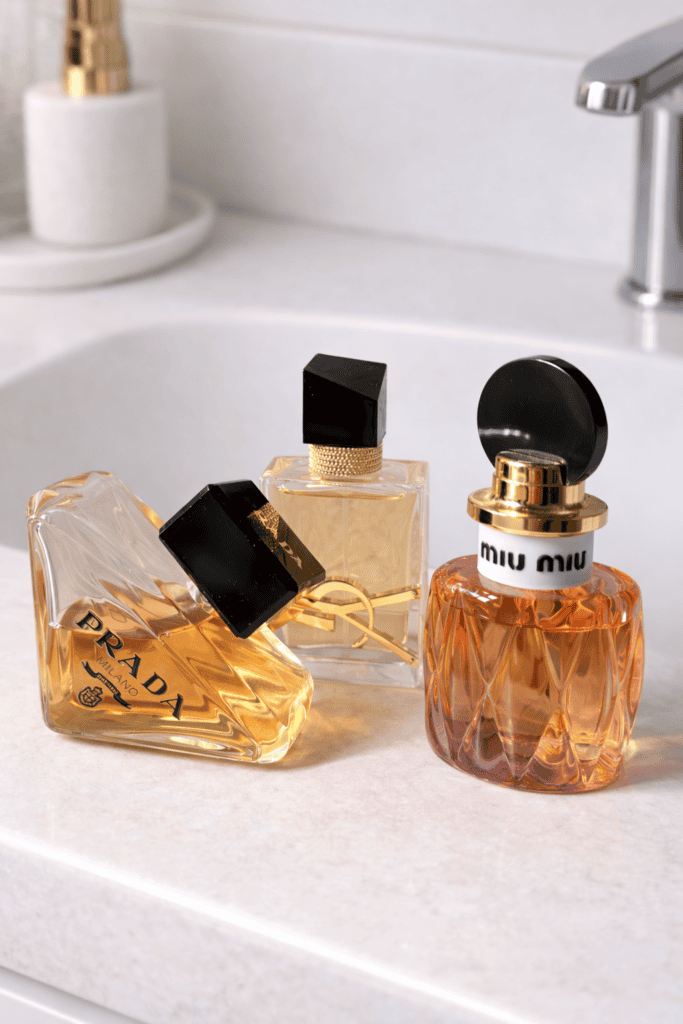
After testing dozens of fragrance stacking combinations, these are the specific perfumes I reach for most: For a warm, cozy combination: I layer Maison Margiela Replica By the Fireplace as my base with Sol de Janeiro Brazilian Bum Bum Cream as my moisturizer layer. The smoky warmth of By the Fireplace blends with the salted caramel and pistachio of the cream for a rich, comforting scent that works beautifully in fall and winter. For a fresh, everyday combination: I use Glossier You as my base and layer Jo Malone Wood Sage & Sea Salt on top. Glossier You is intentionally designed to blend with other scents, and the clean earthiness of Wood Sage & Sea Salt gives it a sophisticated edge without feeling heavy. For a date night combination: I pair YSL Libre as my base with Kayali Vanilla 28 on top. The lavender and orange blossom in Libre merge with Kayali’s warm vanilla to create something sultry but not overpowering. For a summer combination: Sol de Janeiro Cheirosa 62 body mist as a base layer with Maison Margiela Replica Bubble Bath on top creates a clean, beachy scent that holds up well in LA heat. These are my personal favorites, but the beauty of fragrance stacking is that your skin chemistry will make them smell slightly different on you — which is the whole point.What Mistakes Should You Avoid When Layering Perfume?
I made every mistake possible in my first few months of combining fragrances. Here’s what to watch out for: Using too many sprays. This was my biggest mistake. When I first started scent pairing, I applied the same number of sprays I would for a single perfume — for each fragrance. The result was always overwhelming. Cut your normal spray count in half for each perfume. I stick to 3–4 total sprays across both fragrances. Layering two heavy fragrances together. Pairing a strong oud with an intense vanilla gourmand sounds luxurious in theory, but in practice it’s suffocating. Always balance a heavier scent with a lighter one. Not testing on skin first. I used to spray combinations directly on my clothes to test them. The problem is fabric doesn’t warm or develop fragrance the way skin does, so what smelled great on a sweater smelled completely different on my wrist. Rubbing your wrists together. This breaks down the top notes faster and changes how the combined scents develop. Spray and let them sit. Ignoring the weather. A combination that smells perfect on a cool January morning can become cloying and aggressive on a hot August afternoon. I keep separate pairings for warm and cool months. Layering three or more perfumes. I tried this multiple times and the result was always chaotic. Stick to two fragrances maximum. If you want more complexity, use a scented body oil or lotion as a third layer rather than a third perfume. Skipping the moisturizer base. On dry skin, layered perfumes fade within a few hours and the notes separate instead of blending. Unscented lotion is the foundation that makes everything else work.How Does Climate Affect Perfume Layering?
Living in Los Angeles affects how I approach fragrance stacking in specific ways, but these principles apply to any dry or warm climate. The dry climate here means fragrances evaporate faster than they would in humid cities like Miami or New York in summer. I compensate by using slightly more moisturizer as my base layer. During summer months in LA, I avoid heavy gourmand combinations because they can feel overwhelming in 85-degree heat. I lean toward citrus and fresh combinations from June through September. In winter, I use richer pairings because the cooler mornings in neighborhoods like Silver Lake and Echo Park let deeper notes develop stronger. The air quality in Los Angeles also matters. On high-pollution days, I notice my layered perfumes don’t project as well. I’m not sure if this is psychological or chemical, but I’ve adjusted by applying an extra half-spray on those days. If you’re in coastal areas like Santa Monica or Venice, the salt air interacts differently with perfume than it does inland. I find that marine or aquatic notes layer particularly well near the beach. If you live in a humid climate, your combined fragrances will project more and last longer naturally. You can use less moisturizer and fewer sprays. Lighter scent pairings work better year-round in humidity because heavy combinations can become overpowering.Comparison & Alternatives
There are several approaches to building a custom scent beyond traditional fragrance stacking:| Method | Technique | Cost | Customization Level |
|---|---|---|---|
| Perfume Layering | Apply multiple perfumes in sequence | $50–200 for 2 bottles | High |
| Custom Perfume | Commission a unique blend from a perfumer | $200–500+ | Very High |
| Scented Products | Use matching lotion + perfume from the same line | $40–100 | Low |
| Fragrance Oils | Mix your own concentrated oils | $30–80 | Very High |
Pros & Cons of Combining Fragrances
Pros
- Unique scent: Nobody else will smell exactly like you
- Cost-effective: You can create multiple combinations from the same bottles
- Adjustable: Change your combination based on mood, season, or occasion
- Extended wear: Layered perfumes often last longer than single scents
- Creative expression: It’s fun to experiment and discover unexpected pairings
Cons
- Trial and error: Finding good combinations takes time and testing
- Waste potential: Bad combinations mean wasted product
- Complexity: More steps than wearing one perfume
- Overpowering risk: Easy to use too much when combining scents
- Inconsistent results: The same combination can smell different on different days