
This post contains affiliate links. If you purchase through my links, I may earn a small commission at no extra cost to you. I only recommend products I have personally tested and genuinely love.
Published May 5, 2026 · Last updated October 4, 2026
PDRN serum is the salmon DNA ingredient taking over K-beauty, and it is one of the few new actives with real medical history behind it. I wanted to know if the serums live up to the hype, so I tested four of them side by side.
From January through March 2026, I rotated Medicube, Anua, Rejuran and Genabelle in my routine here in LA. Below is what PDRN actually does, how to use it, and which serum I would buy again.
If you want to see where PDRN fits in a full routine, my morning skincare routine walks through the layering order step by step. Before adding any new active, read my list of skincare ingredients to avoid. PDRN is a K-beauty ingredient, so it pairs naturally with the best K-beauty products I am using in 2026, and knowing your skin type first will help you pick the right formula.
Start with Medicube if you are new to PDRN. All four are on Amazon.
What Is PDRN Serum?
PDRN serum (polydeoxyribonucleotide serum) is a skincare product formulated with salmon-derived DNA fragments that support your skin's natural cell repair and regeneration. It matters because PDRN works through the skin's A2A adenosine receptors, the same pathway behind its use in medical wound healing. PDRN serum is most useful for people dealing with dullness, fine lines, uneven texture or post-acne marks, or anyone who wants a gentle, science-backed repair step in their routine.
The Short Answer
PDRN serum delivers polydeoxyribonucleotide, a DNA fragment from salmon, to the skin, where it activates A2A receptors that support repair and calm inflammation. It moved from medical wound care into K-beauty, and the best PDRN serums disclose 5,000 ppm or more. In my 12-week test, Medicube PDRN Pink Peptide Serum (10,000 ppm, about $22) was the best overall.
Quick Takeaways
- PDRN stands for polydeoxyribonucleotide, from purified salmon DNA
- Look for at least 5,000 ppm for visible results
- Medicube PDRN Pink Peptide Serum is my best overall at ~$22
- Safe for sensitive, acne-prone and post-procedure skin
- Apply after toner, before moisturizer, ideally at night
- Expect texture and glow changes after 4 weeks of daily use
What This Guide Covers
- What Is PDRN Serum?
- What Does PDRN Serum Do for Your Skin?
- Which PDRN Serums Actually Deliver Results?
- Which PDRN Products Are Amazon Best Sellers Right Now?
- How Do the Four PDRN Serums Compare?
- Who Should Use PDRN Serum?
- How Do You Use PDRN Serum Step by Step?
- What Mistakes Do People Make With PDRN Serum?
- How I Tested These PDRN Serums
- Is PDRN Serum Worth the Investment?
- Frequently Asked Questions
TL;DR – PDRN serum is worth it if you choose a real concentration and use it daily for at least four weeks. I saw smoother texture, faded post-blemish marks and more glow. Medicube is the best place to start at about $22.
What Is PDRN Serum?
PDRN serum is a skin-repair serum made with polydeoxyribonucleotide, a compound extracted from salmon DNA and purified for skincare. It was first used in medicine for wound healing and post-surgical recovery. Dermatologists in South Korea used injectable PDRN long before it showed up in K-beauty serums and ampoules.
The best-known clinical use is the Rejuran facial injection, which places PDRN into the deeper layer of the skin. A topical serum is not as strong as an injection, but it can still support your skin with steady daily use.
Think of PDRN serum as a daily maintenance step that keeps your skin in gentle repair mode. You may also see it labeled as salmon DNA serum, PN serum (polynucleotide) or PDRN ampoule, which are all versions of the same ingredient family.
What Does PDRN Serum Do for Your Skin?
PDRN serum supports skin repair by activating A2A adenosine receptors in your skin cells. That signal is linked to lower inflammation, faster repair and new collagen. Over weeks of daily use, PDRN serum can help with smoother texture, softer fine lines and a brighter, more even look.
The research is strongest for wound healing. A 2020 systematic review in Regenerative Medicine looked at 34 studies and found PDRN supported tissue repair through the A2A receptor, with few side effects. A 2021 review in Pharmaceuticals reached the same conclusion for skin wound healing.
The cosmetic evidence is earlier. A 2025 systematic review in the Journal of Cosmetic Dermatology found polynucleotide injections improved wrinkles, texture and elasticity, but called the studies low to moderate quality. A serum is gentler than an injection, so expect gradual results.
PDRN also calms. That is why it suits skin recovering from sun damage, peels or microneedling. If the anti-aging angle in my OneSkin OS-01 review interested you, PDRN works in that same cellular territory.
Which PDRN Serums Actually Deliver Results?
The PDRN serums that delivered results in my 12-week test were Medicube PDRN Pink Peptide Serum (best overall, about $22), Rejuran Turnover Ampoule (best for anti-aging, about $50), Genabelle PDRN Hyper Boost Ampoule (best for dark spots, about $36) and Anua PDRN Collagen Glow Serum Spray (best for dry skin, about $21).
As of October 2026, I still rank them on PDRN concentration, texture, the full ingredient list and what I saw over 12 weeks. All four are Korean formulas and all four are on Amazon. You can also shop my picks through my ShopMy shop.
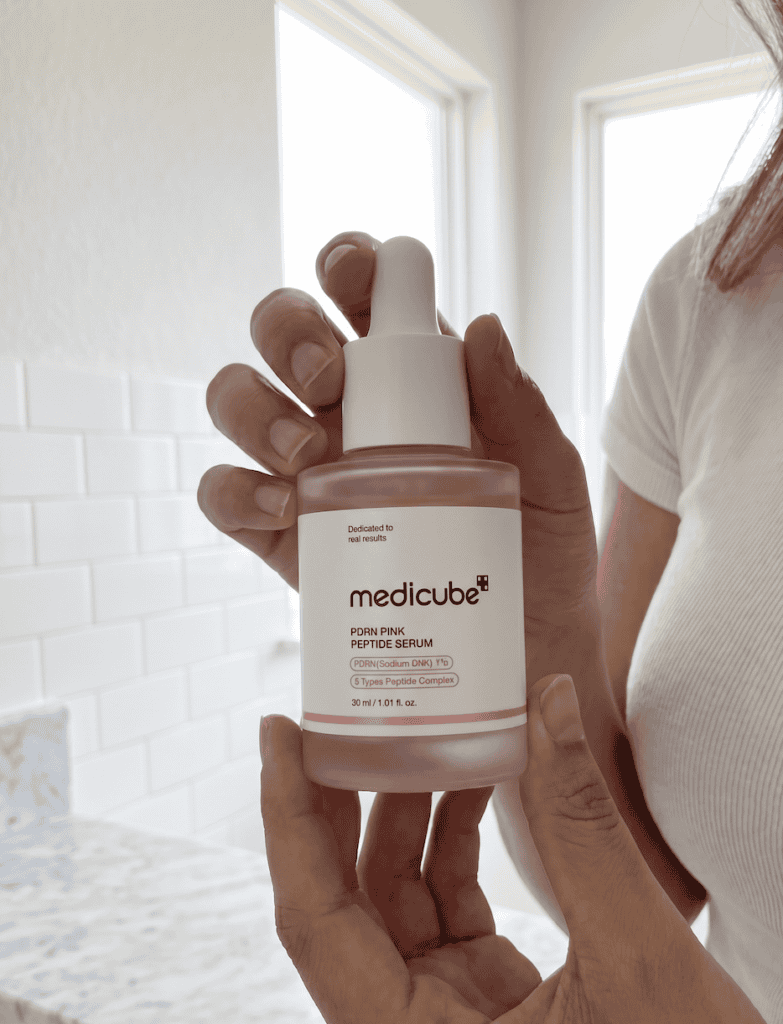
Medicube had the highest disclosed PDRN level I tested, 10,000 ppm, at the lowest price. It is a light gel-serum with a 5-peptide complex and niacinamide for brightening. It is the one I would hand to anyone asking where to start.
Shop Now →Rejuran is the skincare line from the brand behind the Rejuran injectable treatment used in dermatology clinics. It pairs PDRN with EGF and adenosine in a rich ampoule. It is the most clinical-feeling pick, and the priciest.
Shop Now →Genabelle pairs PDRN with hyaluronic acid and a vitamin C derivative, which makes it the pick for post-acne marks and uneven tone. It had the most comfortable daily texture of the four. Store it somewhere cool and dark so the vitamin C stays fresh.
Shop Now →Anua leans into hydration, with hyaluronic acid and centella to calm stressed skin. It layers easily under a richer moisturizer. The PDRN level is lower, so treat it as a hydration and recovery step, not a wrinkle treatment.
Shop Now →Which PDRN Products Are Amazon Best Sellers Right Now?
As of October 2026, the two PDRN products selling best through Amazon creators are the ANUA PDRN Hyaluronic Acid 100 Moisturizing Cream ($16.80) and the BIODANCE Rejuvenating Caviar PDRN Real Deep Mask ($19). Both are on Amazon's 2026 Creator Top Sellers list. Neither one is a serum, so they pair with the serums above instead of replacing them.
These two were not part of my 12-week serum test, so I have not ranked them against Medicube, Rejuran, Anua and Genabelle. I am including them because so many of you are buying them, and they fill the two steps a PDRN serum does not cover: a moisturizer and a weekly mask.
The ANUA PDRN cream is the one beauty product on Amazon's overall creator top-sellers list, right next to the Kindle and the MacBook Air. It pairs PDRN with hyaluronic acid in a 2.02 oz jar and has 4.6 stars from more than 6,200 reviews. Use it after any PDRN serum to seal the serum in.
Shop Now →The BIODANCE PDRN Real Deep Mask is an overnight hydrogel sheet mask and the PDRN pick on Amazon's 2026 creator beauty list. It has 4.6 stars from about 650 reviews. Treat it as a once or twice a week boost, not a daily step.
Shop Now →The easiest PDRN routine is serum, then the ANUA PDRN cream, then SPF in the morning. Add the BIODANCE PDRN mask on one or two nights a week when your skin feels dull or tight.
How Do the Four PDRN Serums Compare?
Medicube has the highest disclosed PDRN at 10,000 ppm for about $22, Genabelle sits at 5,000 ppm with vitamin C for about $36, Rejuran is the clinical-grade splurge at about $50, and Anua is the hydrating, lower-PDRN pick at about $21. Here is how they compare side by side.
Medicube PDRN Pink Peptide Serum
- Price: Around $22
- PDRN: 10,000 ppm
- Best for: Dullness, uneven tone, everyday brightening
- Skin type: All, especially combination and oily
- Key ingredients: PDRN, 5-peptide complex, niacinamide
- Texture: Light gel-serum, no residue
- Watch out: Niacinamide can tingle on very reactive skin
Rejuran Turnover Ampoule
- Price: Around $50
- PDRN: Clinical-grade; ppm not published
- Best for: Anti-aging, post-procedure recovery
- Skin type: All, especially mature or recovering skin
- Key ingredients: PDRN, EGF, adenosine
- Texture: Rich ampoule, best at night
- Watch out: Can feel heavy on oily skin in summer
Genabelle PDRN Hyper Boost Ampoule
- Price: Around $36
- PDRN: 5,000 ppm
- Best for: Dark spots, post-acne marks
- Skin type: All, especially hyperpigmentation-prone
- Key ingredients: PDRN, hyaluronic acid, vitamin C derivative
- Texture: Silky, no tackiness
- Watch out: Vitamin C oxidizes; use within six months
Anua PDRN Collagen Glow Serum Spray
- Price: Around $21
- PDRN: 100+ ppm
- Best for: Dry skin, barrier repair, calming
- Skin type: Dry, normal and sensitive
- Key ingredients: Sodium DNA (PDRN), hyaluronic acid, centella
- Texture: Watery, layers well
- Watch out: Lower PDRN means slower anti-aging results
Who Should Use PDRN Serum?
PDRN serum suits anyone dealing with dullness, early signs of aging, uneven texture, post-acne marks or tired skin. It works for dry, oily, combination and sensitive skin because it supports your skin instead of stripping it. Post-procedure skin responds especially well.
Dry skin types should look for PDRN paired with hyaluronic acid, like the Anua. Oily and combination skin does better with a light gel, like the Medicube.
Sensitive skin often loves PDRN because it calms more than it disrupts. Unlike retinol or acids, it does not cause purging, dryness or extra sun sensitivity.
One caveat: skip PDRN during pregnancy or breastfeeding. There are no studies on safety for those groups, so check with your dermatologist first.
Pick by your main skin goal.
How Do You Use PDRN Serum Step by Step?
Use PDRN serum after cleansing and toning and before moisturizer. Press 2 to 3 drops into your skin, wait 60 seconds, then moisturize. Use it morning or night, but night is better because your skin does most of its repair while you sleep.
-
1
Cleanse with a gentle face wash and pat your skin dry.
-
2
Apply toner if you use one, and let it absorb for about 30 seconds.
-
3
Dispense 2 to 3 drops or one pump of PDRN serum. Less is enough.
-
4
Press the serum into your skin with your palms, focusing on the eyes, forehead and cheeks.
-
5
Wait 60 seconds so it absorbs before anything goes on top.
-
6
Seal it in with your regular moisturizer.
-
7
In the morning, finish with SPF. Sun damage undoes repair faster than any serum fixes it.
My nighttime skincare routine is where I get the most out of PDRN. I layer it right after toner.
What Mistakes Do People Make With PDRN Serum?
The biggest mistake people make with PDRN serum is quitting before week four. PDRN works slowly, so most people only notice smoother texture and a subtle glow between week three and week four of daily use.
- Layering it on freshly exfoliated skin. On AHA or BHA nights, skip PDRN or wait an hour. My guide on how to exfoliate your face covers a safe schedule.
- Using too much. Two to three drops cover your whole face. More does not work faster.
- Skipping SPF. Daily sun exposure undoes repair faster than any serum can fix it.
- Not letting it absorb. Give it 60 seconds before silicone primers or oils.
- Buying on hype, not concentration. Look for a disclosed ppm or PDRN high on the ingredient list.
How I Tested These PDRN Serums
I tested all four PDRN serums from January through March 2026, a full 12 weeks, here in Los Angeles. LA is warm, dry and sunny year-round, which puts steady stress on skin and makes repair results easier to see. I rotated each serum in two-week cycles and kept the rest of my routine the same.
I took photos in the same lighting every two weeks and tracked texture, tone and fine lines. I added no other new products during the test, so changes could be tied to the serum in rotation.
My skin is combination, oily in the T-zone and normal to slightly dry on the cheeks, with mild hyperpigmentation and early fine lines. I finished at least one full bottle of each serum before forming an opinion.
Is PDRN Serum Worth the Investment?
Yes, PDRN serum is worth it if you choose a formula with a real concentration and use it every day for at least four weeks. PDRN has a medical track record in wound healing, and the cosmetic research, while early, is promising. My verdict after 12 weeks: Worth It.
The Medicube PDRN Pink Peptide Serum at about $22 is the place to start. It has the highest disclosed PDRN of the four, 10,000 ppm, at a price that is easy to try.
For more advanced concerns, like visible aging or post-procedure skin, the Rejuran Turnover Ampoule at about $50 is the clinical-grade pick. For dark spots, the Genabelle PDRN Hyper Boost Ampoule pairs PDRN with vitamin C.
Pros
- Real medical historyPDRN was studied for wound healing long before skincare.
- GentleNo purging, peeling or extra sun sensitivity, unlike retinol.
- Works for all skin typesIncluding sensitive and post-procedure skin.
- Visible change in 4 to 12 weeksSmoother texture, more glow, faded marks.
Cons
- SlowPlan on four weeks of daily use before judging it.
- Concentration variesLow-ppm formulas won't do much, whatever the price.
- Not veganPDRN is derived from salmon.
- Not studied in pregnancySkip it while pregnant or breastfeeding.
Frequently Asked Questions
What does PDRN stand for in skincare?+
PDRN stands for polydeoxyribonucleotide. It is a DNA fragment from salmon that supports cell repair when applied to the skin. PDRN is used both as a medical injectable and as an active ingredient in serums and ampoules.
Is PDRN serum the same as salmon sperm serum?+
Yes. PDRN is extracted from salmon DNA, which is why it is often called salmon DNA or salmon sperm serum. The DNA is purified into a clean compound before it goes into skincare, so the final formula contains no raw biological material.
How long does it take for PDRN serum to work?+
Most people see smoother texture and a subtle glow around week three or four of daily use. For firmer skin and softer fine lines, plan on 8 to 12 weeks of consistent use before judging results.
Can I use PDRN serum every day?+
Yes. PDRN serum is gentle enough for daily use, morning and night. It causes no purging and no extra sun sensitivity, and if your skin is reactive, start once a day at night and add mornings after two weeks.
Can I use PDRN serum with retinol?+
Yes, but use them at different times. PDRN in the morning and retinol at night works well, or alternate nights. If you are new to retinol, my retinol for beginners guide explains how to start slowly.
Is PDRN serum safe for sensitive skin?+
Yes. PDRN serum is one of the best-tolerated actives in skincare and is widely considered safe for sensitive skin. Many people with sensitive skin find it calms irritation. Patch test any new serum first, especially formulas with niacinamide.
What is the difference between PDRN and retinol?+
Both PDRN and retinol support collagen, but they work differently. Retinol speeds up cell turnover and often causes dryness and sun sensitivity at first. PDRN supports repair through the A2A receptor without speeding up turnover, so it is gentler.
Can PDRN serum help with acne scars?+
PDRN serum can help fade post-acne marks and soften shallow texture over time, thanks to its repair and anti-inflammatory effects. The Genabelle PDRN Hyper Boost Ampoule is a good pick for marks because it pairs PDRN with a vitamin C derivative.
Which PDRN serum has the highest concentration?+
Of the four I tested, Medicube PDRN Pink Peptide Serum has the highest disclosed concentration at 10,000 ppm. Rejuran Turnover Ampoule is clinical-grade and very potent, but Rejuran does not publish a ppm figure.
Can I use PDRN serum after microneedling or a chemical peel?+
Yes, PDRN serum is a great post-procedure step because of its repair and calming effects. Wait until the skin has fully closed, usually 24 to 48 hours after treatment, and follow your provider's aftercare advice.
Is PDRN serum vegan?+
No. PDRN comes from salmon, so it is not vegan. If you want a vegan option with similar goals, look for serums with biofermented growth factors or a high-concentration peptide blend.
The Bottom Line
What I love most about PDRN is that it changes your relationship with your skin from fixing problems to supporting it. Your skin already knows how to repair itself, and PDRN gives it a steady nudge to keep doing that.
Living in LA means sun, dry air and late nights, and that stress adds up on your skin. A routine that works on repair, not just the surface, feels powerful.
The results I saw over 12 weeks were quiet, not dramatic. They were the kind where someone asks what you have been doing differently, and that is the kind of confidence I am always chasing.
The one I would start with, and the one I would upgrade to.
Sources & Further Reading

About the AuthorJasmine Del Toro
I'm Jasmine Del Toro, a Los Angeles-based lifestyle blogger who tests beauty products, wellness trends, and everyday solutions in real life. I spent 12 weeks in early 2026 testing four PDRN serums side by side to see which ones actually deliver the repair results Korean skincare is known for. I share what actually works, what doesn't, and what you need to know before spending your money. My approach is practical, honest, and based on personal experience living in LA.
I'm an Amazon Influencer, an Icon-level ShopMy creator, and a brand ambassador for Revolve, Victoria's Secret, and DoorDash.
This post may contain affiliate links – I only recommend products I have personally used and believe in.